Most Instagram advice sounds complex, but a useful strategy for a small business is simple: decide what you want from Instagram, define repeatable content pillars, and post consistently with a workflow you can sustain.
You do not need to chase every trend. You need a system that helps customers understand what you offer, trust your brand, and take action.
Start with One Primary Goal
Pick one main objective for the next 30 days. If you try to optimize for everything at once, your content gets scattered.
- Awareness: get discovered by more people in your local area or niche.
- Engagement: increase meaningful comments, saves, and shares.
- Conversion: drive DMs, bookings, product clicks, or store visits.
Build 3-4 Content Pillars
Content pillars are recurring themes that make planning easier and your profile more coherent.
- Product or service value: show outcomes, benefits, and use cases.
- Proof: testimonials, before/after, customer stories, or social proof.
- Behind the scenes: process, team, or day-to-day moments that build trust.
- Offers and calls-to-action: promotions, launches, or limited-time updates.
Rotate these pillars each week so your feed does not become repetitive.
Use a Repeatable Creation Workflow
1. Draft from clear prompts
Start with one sentence that includes topic, vibe, and audience. Specific prompts produce stronger first drafts and better visuals.
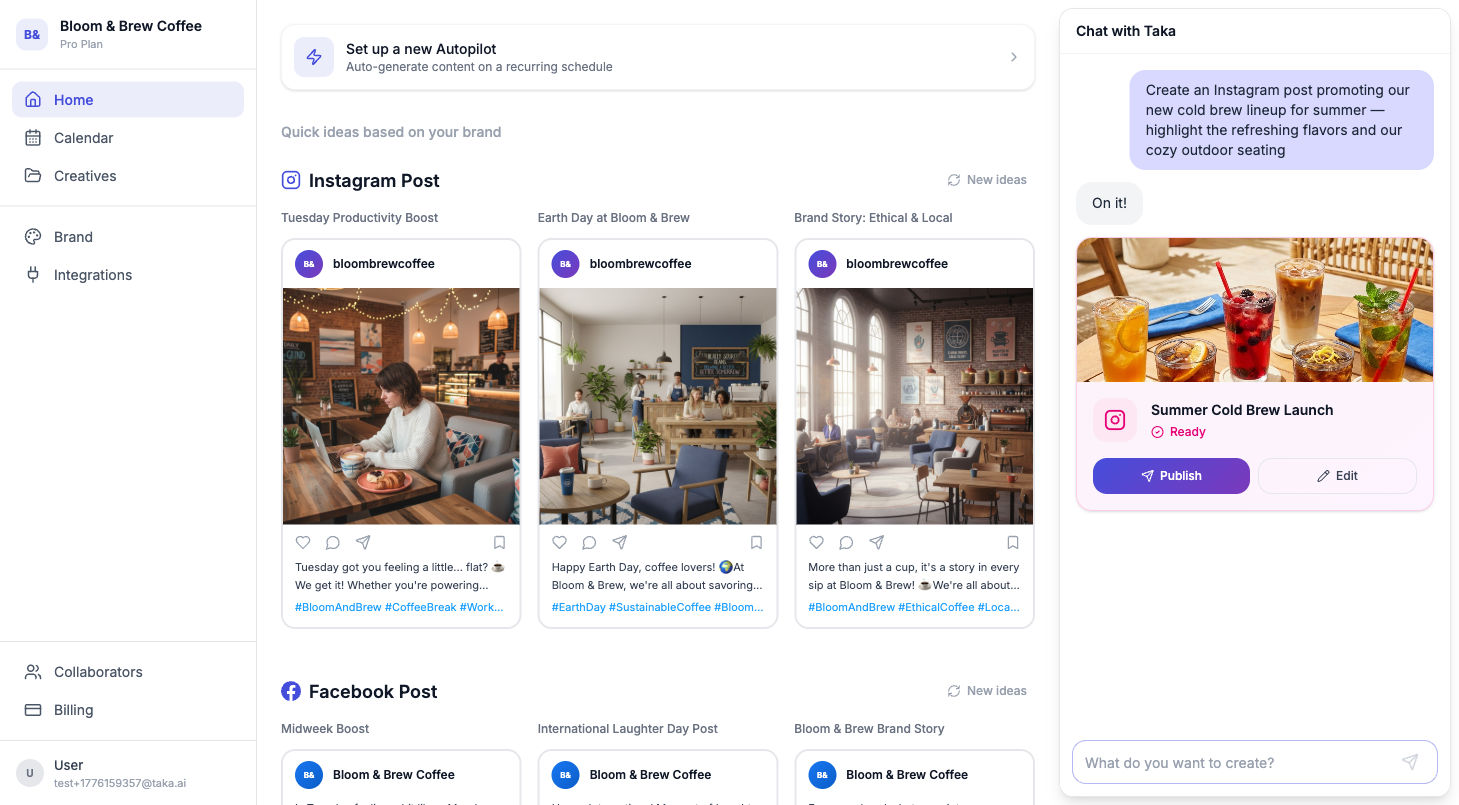
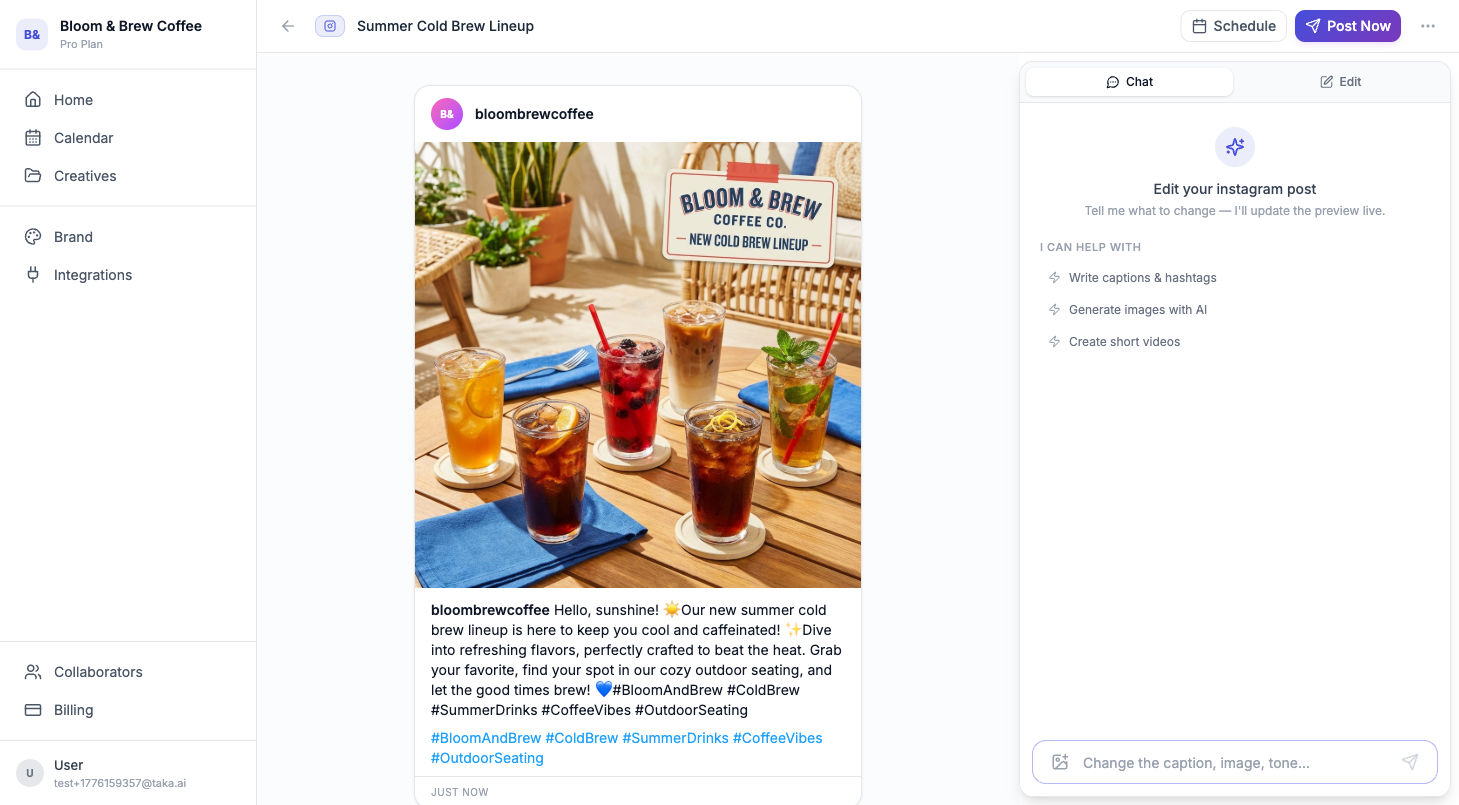
2. Generate full posts, not just captions
Quality strategy needs complete assets: visual, caption, and hashtags. This reduces publishing friction and keeps your posting rhythm stable.
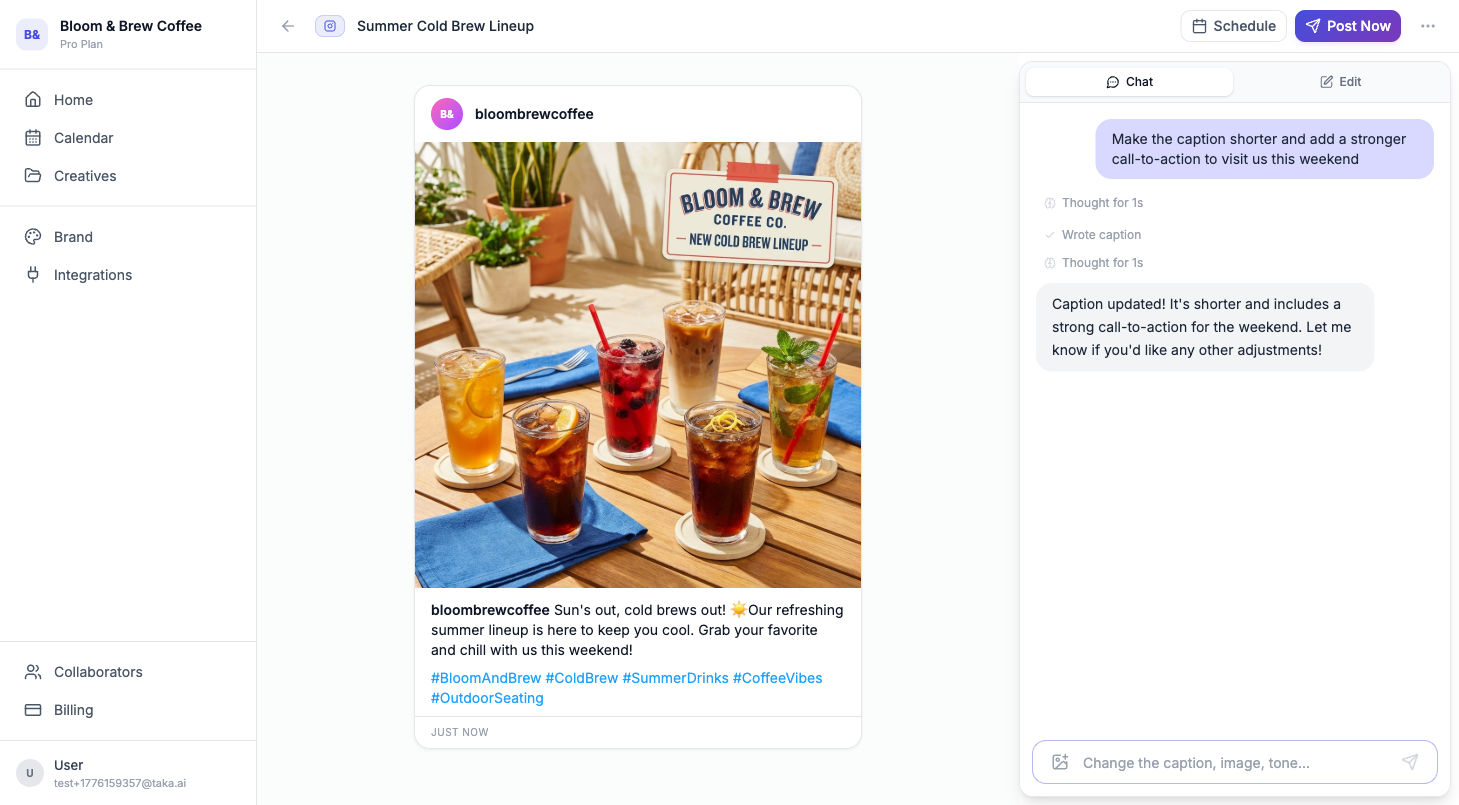
3. Refine fast, then schedule
Make quick iterations like “shorter caption” or “stronger CTA,” then place each post on your calendar for the week.
What to Track Weekly
- Saves and shares to understand content value.
- Profile actions such as link clicks or DM starts.
- Post-to-post consistency so your schedule remains steady.
Look for patterns by pillar. Double down on themes that drive real business actions, not just vanity metrics.
An Instagram strategy works when it is simple enough to repeat: one goal, a few pillars, a weekly batch workflow, and fast iteration. Keep it practical and consistent, and results compound over time.