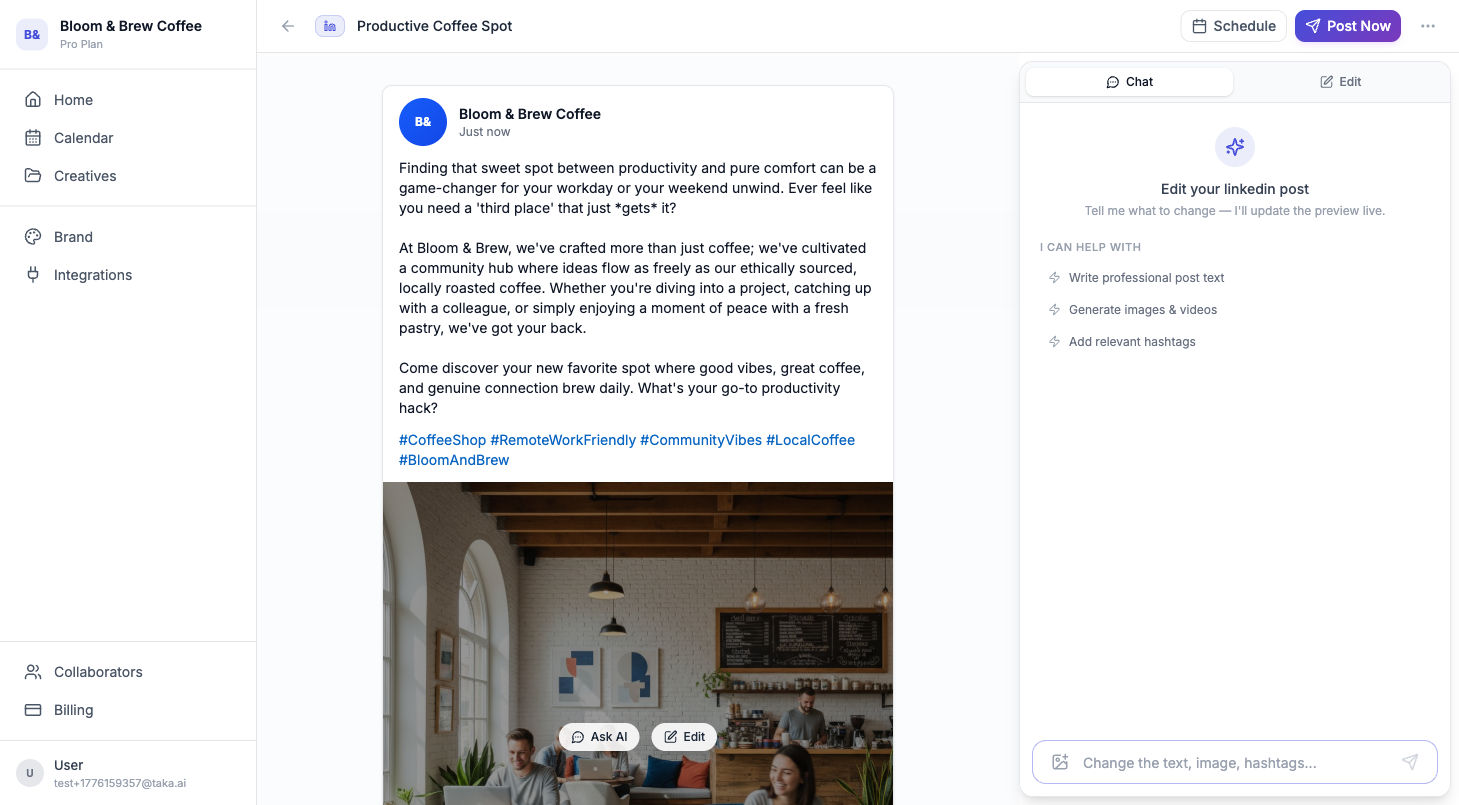
LinkedIn can drive serious business results for small teams, but only if your content is consistent and credible. The challenge is that most business owners post in bursts, then disappear for weeks because creation takes too long.
Effective LinkedIn management is not about posting daily. It is about a clear message, a practical cadence, and a repeatable workflow you can maintain.
What Good LinkedIn Management Looks Like
- Clear point of view: people should understand what your business stands for in seconds.
- Consistent posting rhythm: 2-3 quality posts weekly beats random posting spikes.
- Balanced content mix: insights, proof, and offer-driven posts, not nonstop promotion.
- Professional tone: clear, useful, and human without corporate jargon.
A Practical LinkedIn Content Mix
Use a simple weekly mix to stay relevant and avoid repetition:
- Educational post: one actionable lesson from your experience.
- Proof post: client result, case highlight, or meaningful business milestone.
- Offer post: clear call-to-action tied to your product or service.
This structure keeps your profile useful for your audience while still supporting pipeline and revenue goals.
Build a Weekly LinkedIn Workflow
1. Start from one business goal
Decide the focus for this week: book calls, build trust, or promote a launch. Goal-first planning makes each post easier to write and evaluate.
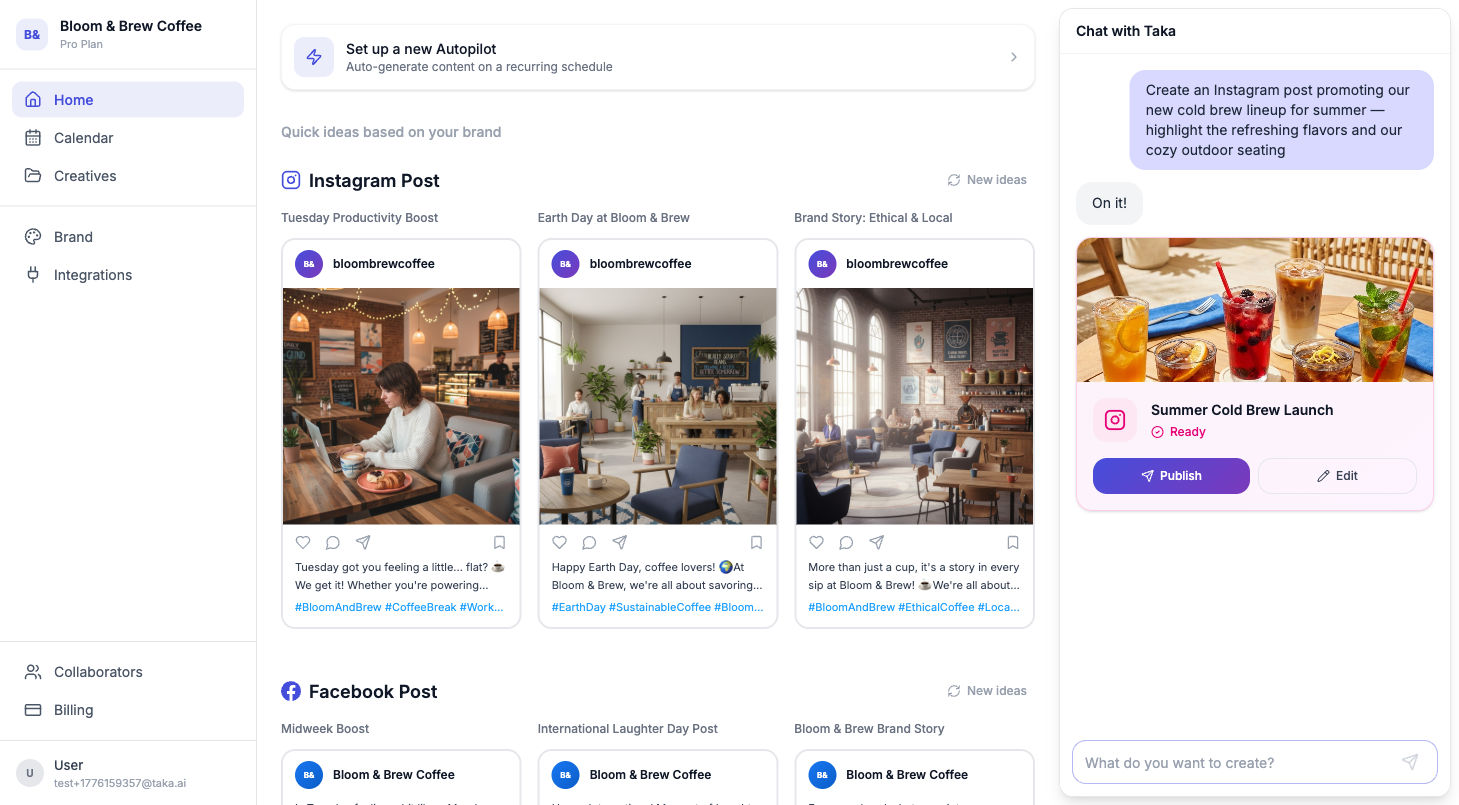
2. Draft posts in one session
Batch your drafts using clear prompts. Include context, audience, and desired CTA so you get strong first versions.
3. Refine tone and clarity
Edit for brevity, readability, and specific outcomes. LinkedIn rewards clear ideas and practical value more than complex formatting.
Common LinkedIn Management Mistakes
- Posting only when you have time. Inconsistency kills momentum.
- Too much self-promotion. Value and proof should come before hard selling.
- Generic AI copy. If your voice sounds like everyone else, trust drops.
- No scheduling discipline. Drafts without timing still lead to missed posting windows.
LinkedIn management works when it is systematic: define your goal, batch quality drafts, refine quickly, and keep a steady publishing cadence. You do not need a big team. You need a workflow you can repeat every week.